
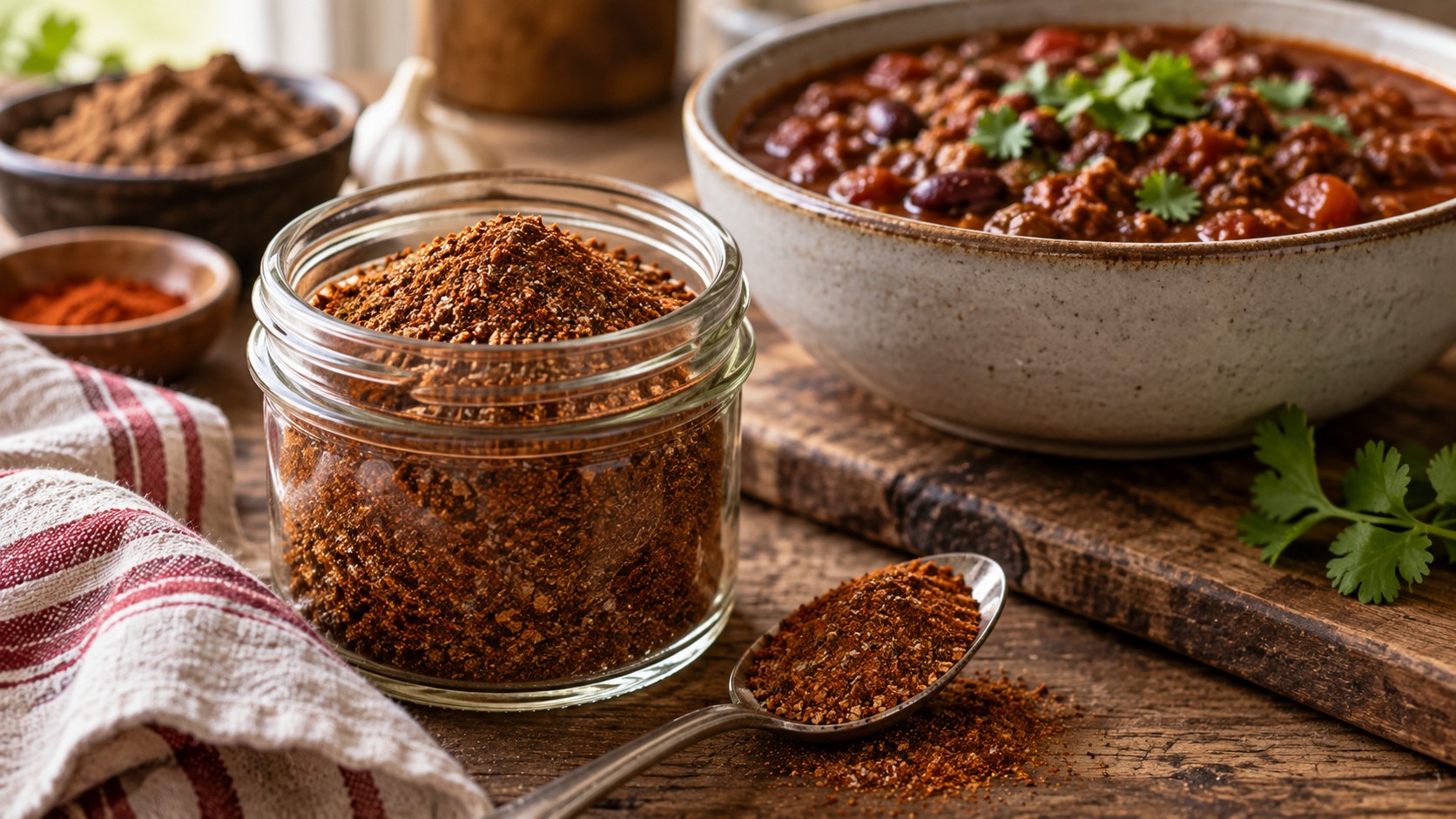
If you’re tired of reaching for a chili seasoning packet every time you make a pot of chili, we think this is the best homemade chili seasoning and definitely worth keeping in your pantry! It combines chili powder, paprika, cumin, unsweetened cocoa powder, garlic, onion, salt, and a small amount of turmeric for a rich, savory blend with plenty of depth.
You don’t need anything fancy to make it, either. Everything comes together in a few minutes, and once you have a jar of the blend ready to go, you don’t have to measure several spices every time you make chili.
Homemade Chili Seasoning Recipe
This homemade chili seasoning mix uses familiar pantry spices with one unexpected addition: unsweetened cocoa powder.
The combination of chili powder, paprika, cumin, and cocoa creates a warm, earthy flavor, while garlic and onion add savory depth. A little turmeric rounds out the blend without making its presence obvious.
Ingredients
- 2 tablespoons chili powder
- 1 tablespoon smoked or sweet paprika
- 2 teaspoons ground cumin
- 1 tablespoon unsweetened cocoa powder
- 1 teaspoon garlic powder
- 1 teaspoon onion powder
- 1 teaspoon kosher salt
- ¼ teaspoon ground turmeric
I use coarse kosher salt in this recipe. If you substitute another type of salt, keep in mind that the crystals can vary considerably in size, so standard measuring spoons may yield different levels of saltiness.
How to Make Homemade Chili Seasoning
Making homemade chili seasoning is about as easy as it gets.
Add all of the spices to a small bowl and stir until they’re thoroughly combined. Take a minute to make sure the cocoa powder and turmeric are evenly distributed throughout the chili powder and paprika.
That’s it.
Transfer the finished seasoning to an airtight jar or container if you’re not using it right away.
If you make chili regularly, you can easily double or triple the recipe. Having a jar of homemade chili seasoning in the pantry means the next batch of chili starts with a lot less measuring.
What Is in a Homemade Chili Seasoning Mix?

A homemade chili seasoning mix doesn’t need a long list of ingredients. This blend starts with chili powder and builds flavor with paprika, cumin, unsweetened cocoa powder, garlic, onion, kosher salt, and a small amount of turmeric.
Chili powder is the bold, earthy base of the blend and provides most of the chile flavor.
Paprika adds rich color and a mild pepper flavor. Use sweet paprika for a straightforward chili seasoning or smoked paprika when you want a deeper, smoky note.
Ground cumin brings the warm, earthy flavor that’s so closely associated with chili.
Unsweetened cocoa powder is what makes this blend a little different. It doesn’t make the chili taste like chocolate. Instead, it contributes savory depth, darker color, and body to the finished chili.
Garlic powder and onion powder add savory flavor and help balance the stronger spices.
Kosher salt brings the flavors together. Because the other ingredients in your chili may also contain salt, you can adjust the finished chili to taste.
Ground turmeric is used in a very small amount. It adds a subtle warm, earthy note without turning the seasoning into a turmeric-forward blend.
How Much Homemade Chili Seasoning Do You Use Per Pound of Meat?
This recipe makes about 6 tablespoons of chili seasoning. For 1 pound of meat, use about 3 to 5 tablespoons, depending on how strongly seasoned you like your chili.
How much you ultimately use can depend on what else is going into the chili. Tomatoes, beans, broth, vegetables, and other ingredients can all affect how strongly seasoned the finished pot tastes.
Start with 3 tablespoons for 1 pound of meat and add more to taste. You can always add another tablespoon or two if you want a more intensely seasoned chili.
How to Use Homemade Chili Seasoning
The obvious place to use this seasoning is a pot of chili.
Brown your ground beef or turkey, then add the homemade chili seasoning along with the rest of your chili ingredients. Let everything simmer together so the spices have time to blend into the meat, tomatoes, beans, and other ingredients.
The cocoa powder is particularly interesting here. You shouldn’t be able to pick out a chocolate flavor. Instead, it quietly adds depth to the finished chili.
And taste as you go.
Chili can change quite a bit as it cooks. What tastes perfectly seasoned early in the process may need a little adjustment once you’ve added more tomatoes, beans, or broth.
This blend isn’t limited to chili, either. Try it with ground turkey, chicken, black beans, roasted vegetables, tacos, fajitas, or seasoned potatoes whenever you want that warm chile-and-cumin flavor.
How to Make Mild Chili Seasoning
This recipe is already relatively easy to keep mild because it doesn’t rely on cayenne pepper for its heat.
The biggest variable is the chili powder you choose. Chili powders vary from brand to brand, and some have considerably more heat than others.
For a mild chili seasoning, choose a mild chili powder. You can also start with less of the blend in your chili and add more after it has simmered if you want to keep the heat and overall seasoning under control.
The paprika, cumin, cocoa, garlic, onion, and turmeric provide plenty of flavor, so a mild chili doesn’t have to taste flat.
Can You Make Homemade Chili Seasoning Without Chili Powder?
You can, although it won’t taste exactly like this recipe.
Chili powder provides the main chile flavor and forms the base of this blend. If you don’t have any, paprika can provide some of the bulk and pepper flavor, but you’ll need another ground chile to replace the flavor and heat that chili powder normally provides.
Keep the cumin, cocoa powder, garlic, onion, salt, and turmeric in the mixture. Those ingredients contribute much of the blend’s character beyond the chile itself.
One important distinction: chili powder and pure chile powder aren’t necessarily the same thing. Chili powder is often a blend of ground chiles and other spices, while a pure chile powder may be considerably hotter.
If you’re substituting, start with a small amount and adjust to taste.
Easy Ways to Customize This Chili Seasoning Mix

The original blend is balanced as written, but it’s easy to make small adjustments.
Make it smoky: Choose smoked paprika instead of sweet paprika.
Make it milder: Use a mild chili powder.
Make it hotter: Add a small amount of cayenne or another ground chile to the batch. Add it gradually so you don’t overpower the other flavors.
Adjust the salt: If you’re using salted beans, broth, tomatoes, or other ingredients, you can reduce the salt in the seasoning and adjust the finished chili instead.
Make a larger batch: Multiply every ingredient by the same amount and store the extra seasoning in an airtight container.
The cocoa powder and turmeric are part of what gives this particular blend its character, so I wouldn’t automatically leave them out just because they’re less common in homemade chili seasoning recipes.
Homemade Chili Seasoning vs. Store-Bought Chili Seasoning
Store-bought chili seasoning has one obvious advantage: convenience. Open the packet, add it to the pot, and you’re done.
But homemade seasoning becomes just as convenient once you have a jar in the pantry.
The biggest difference is control. You know exactly what’s in the blend, and you can adjust the paprika, chili powder, and salt to suit the chili you’re making.
You’re not making dinner more complicated. You’re just doing the measuring once instead of every time you make chili.
How to Store Homemade Chili Seasoning

Store homemade chili seasoning in an airtight jar or container in a cool, dry pantry or kitchen cabinet.
Keep it away from moisture, direct sunlight, and the heat from your stove. Dried spices gradually lose their aroma and flavor when they’re exposed to heat, light, and moisture.
If you make a large batch, write the date on the container so you know when you mixed it.
The best way to judge an older spice blend is by its aroma. If you open the jar and it barely smells like anything anymore, it’s probably time to make a fresh batch.
For more cozy recipes to warm up with this season, check out our Old-Fashioned Hot Apple Cider
and Classic Hot Toddy.
Frequently Asked Questions About Homemade Chili Seasoning
Is chili powder the same as chili seasoning?
No. Chili powder is an ingredient used to make chili seasoning. A chili seasoning mix combines chili powder with other spices and seasonings to create a blend that’s ready to add to chili.
Can I use sweet paprika instead of smoked paprika?
Yes. Both work in this recipe. Sweet paprika gives the seasoning a mild pepper flavor and rich color, while smoked paprika adds a deeper smoky note.
What kind of cocoa powder should I use in chili seasoning?
Use unsweetened cocoa powder. It adds depth, richer color, body, and a subtle umami quality to the chili without making it taste like chocolate or adding sweetness.
Can I double this homemade chili seasoning recipe?
Yes. Multiply every ingredient by the same amount and mix the larger batch thoroughly before storing it in an airtight container.
Can I use homemade chili seasoning for things besides chili?
Absolutely. Try it with tacos, fajitas, seasoned ground meat, black beans, roasted vegetables, potatoes or whenever you want a warm, earthy chile flavor.
Homemade Chili Seasoning
Ingredients
Method
- Add all ingredients to a small bowl.
- Stir thoroughly until the spices are evenly combined.
- Use 3–5 tablespoons per pound of meat; store any unused seasoning in an airtight container in a cool, dry pantry.