
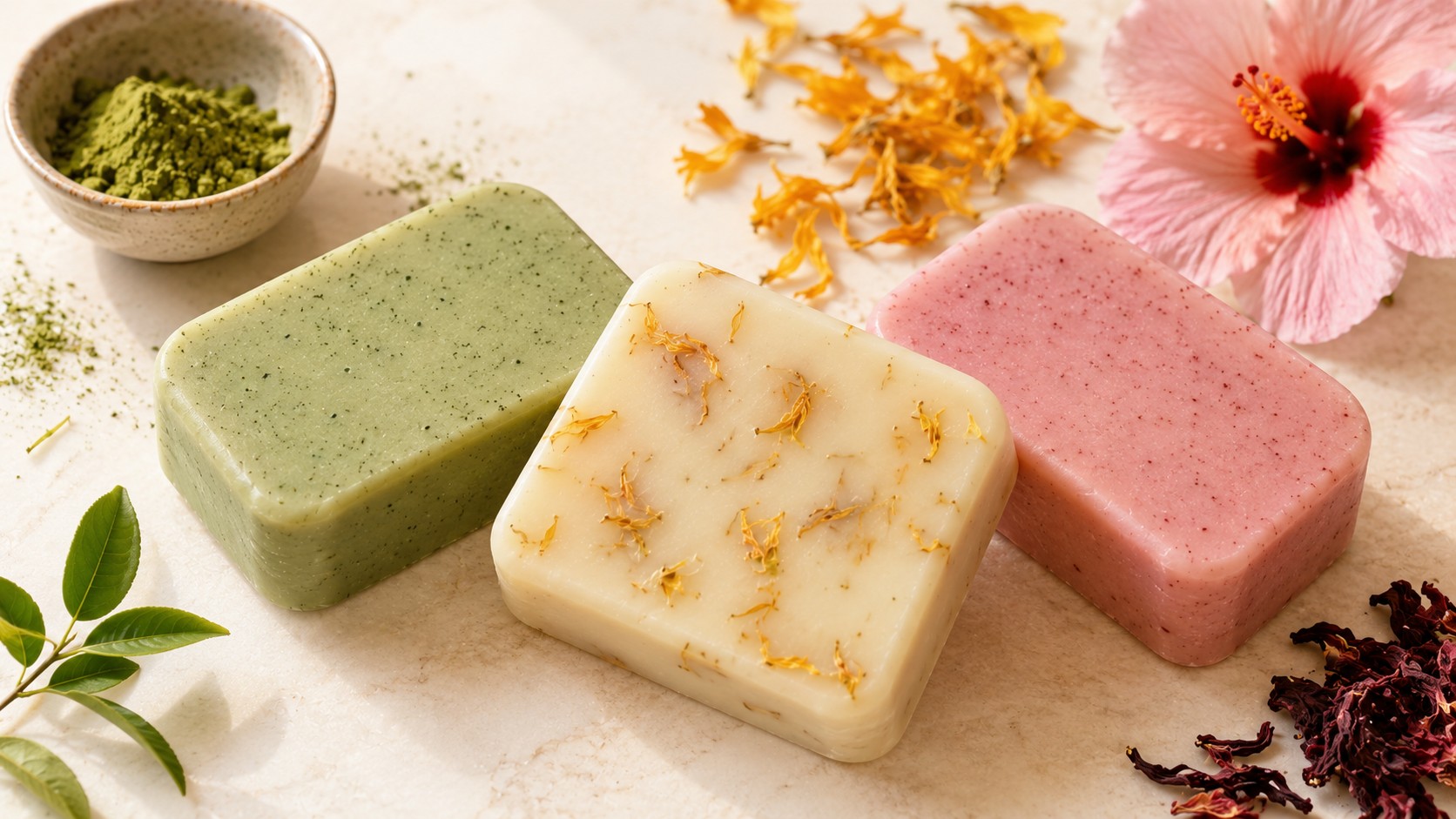
These easy melt-and-pour soap recipes with natural ingredients are an easy way to create beautiful handmade soaps using botanical ingredients like calendula, matcha, rose clay, oatmeal, aloe vera, and saffron. With a quality soap base and a few carefully chosen natural ingredients, it’s possible to create bars that are beautiful enough to give as gifts while still being simple enough for beginners to make at home.
From soothing oatmeal and creamy rice milk to vibrant beetroot and earthy matcha, natural ingredients for soap can change the color, texture, and appearance of handmade soap without requiring complicated techniques or special equipment. These botanical ingredients make every recipe feel unique.
Every recipe in this collection starts with the same beginner-friendly melt-and-pour process, making it easy to experiment with different ingredients as your confidence grows. Whether you’re looking for natural melt-and-pour soap recipes, easy melt-and-pour soap recipes, or inspiration for beautiful handmade soap recipes, these projects offer plenty of ideas to try.
Before You Begin
Every recipe below uses a melt-and-pour soap base, making these DIY melt-and-pour soap recipes approachable even for first-time soap makers. Start with just one natural ingredient per batch. Experimenting with individual powders, clays, oils, or botanicals makes it easier to see how each one affects the finished soap. Once you’re comfortable with the basics, you can begin combining ingredients to create your own signature recipes.
For each recipe, you’ll follow the same basic process:
- Cut the melt-and-pour soap base into small cubes.
- Melt it gently in the microwave or a double boiler.
- Stir in the featured ingredients and any essential oils.
- Pour the mixture into your soap molds.
- Lightly spritz the surface with rubbing alcohol to remove bubbles, if needed.
- Let the soap cool and harden completely before unmolding.
Once you’re comfortable with those basic steps, the fun begins. Different botanical ingredients, natural powders, clays, and plant oils create different colors, textures, and finishes, allowing you to make each batch feel unique.
| Natural & Botanical Soap Ingredients | Best For | Creates | Examples |
|---|---|---|---|
| Natural Powders | Adding natural color | Soft, earthy shades that vary by ingredient | Beetroot, Matcha, Hibiscus |
| Clays | Elegant, matte-looking bars | Muted, natural colors with a smooth appearance | Rose Clay |
| Plant Oils | Enriching the soap base | Creamy feel and, in some cases, subtle natural color | Avocado Oil, Sea Buckthorn Oil |
| Milk Powders | Creamy, minimalist soaps | Soft ivory tones and a rich-looking lather | Coconut Milk Powder, Rice Milk Powder |
| Dried Botanicals | Decorative accents | Natural texture and visual interest | Calendula Petals |
If you’re new to soap making, start with our Beginner’s Guide to Melt-and-Pour Soap Making, where you’ll find a complete step-by-step tutorial, recommended supplies, and troubleshooting tips.
1. Beetroot Melt-and-Pour Soap

Beetroot powder gives handmade soap a naturally rosy color that’s difficult to achieve with pantry ingredients alone. Depending on how much you use and the type of soap base, the finished bars can range from a soft blush pink to a muted berry shade.
Why You’ll Love It
This recipe is especially beautiful for spring, Valentine’s Day, Mother’s Day, or anyone who prefers soft botanical colors over synthetic dyes. The finished bars look elegant in simple rectangle, oval, or floral molds and pair beautifully with minimalist packaging.
You’ll Need
- 1 pound white goat’s milk or shea butter melt-and-pour soap base
- 1–2 teaspoons beetroot powder
- 15–20 drops essential oil (optional)
- Soap mold
Best Essential Oil Pairings
- Rose geranium
- Sweet orange
- Lavender
- Palmarosa
How to Make It
Mix the beetroot powder with a small amount of melted soap until smooth, then stir it into the remaining soap base. This helps prevent small clumps and creates a more even color throughout the bar.
Add your essential oils, stir gently, and pour into the molds.
Because natural colorants vary, start with a smaller amount of beetroot powder. You can always add a little more before pouring if you’d like a deeper shade.
2. Rose Clay Melt-and-Pour Soap

Rose clay creates elegant bars with a soft dusty-pink color and a smooth, refined appearance. It’s one of the easiest natural colorants to work with and gives melt-and-pour soap a boutique look without requiring swirls or complicated designs.
Why You’ll Love It
If you appreciate clean, minimalist soap designs, rose clay is an excellent choice. The muted color complements simple molds and understated packaging, making these bars especially lovely for handmade gifts.
You’ll Need
- 1 pound white melt-and-pour soap base
- 1 teaspoon rose clay
- 15–20 drops essential oil (optional)
- Soap mold
Best Essential Oil Pairings
- Lavender
- Rose geranium
- Frankincense
- Bergamot
How to Make It
Blend the rose clay with a small amount of melted soap until completely smooth before stirring it into the remaining base. Mixing it separately first helps prevent streaks or dry pockets.
Once the color is evenly incorporated, add your essential oils and pour into your molds.
Silicone molds with clean, simple shapes beautifully showcase the clay’s soft, matte finish.
3. Aloe Vera Melt-and-Pour Soap

Aloe vera is a classic addition to handmade soap because it pairs beautifully with fresh, clean scents and a simple botanical aesthetic. It works especially well with clear glycerin soap bases, creating bars with a light, spa-inspired appearance.
Why You’ll Love It
This recipe has a fresh, understated look that’s perfect for guest bathrooms, everyday use, or simple gift sets. A clear soap base creates a modern, translucent finish, while a white base produces a softer, creamier appearance.
You’ll Need
- 1 pound clear glycerin melt-and-pour soap base
- 1 tablespoon cosmetic-grade aloe vera gel
- 15–20 drops essential oil (optional)
- Soap mold
Best Essential Oil Pairings
- Eucalyptus
- Tea tree
- Lemon
- Lavender
How to Make It
Allow the melted soap to cool slightly before stirring in the aloe vera gel. This helps keep the mixture smooth and evenly blended.
Add your essential oils, stir gently to minimize bubbles, then pour into your molds.
For a fresh botanical look, this recipe pairs especially well with clear soap bases and simple rectangular or oval molds.
4. Calendula Melt-and-Pour Soap

Calendula petals are one of the most popular botanical ingredients in handmade soap, and it’s easy to see why. Their warm golden color stands out beautifully against creamy white soap bases, creating bars that look naturally cheerful without much effort.
Why You’ll Love It
Calendula soap has a timeless, cottage-inspired look that works year-round. It’s especially pretty in farmhouse-style bathrooms, gift baskets, or spring and summer collections. Because the petals add visual interest on their own, this recipe doesn’t need fancy molds or decorative techniques.
You’ll Need
- 1 pound goat’s milk or shea butter melt-and-pour soap base
- 1–2 tablespoons dried calendula petals
- 15–20 drops essential oil (optional)
- Soap mold
Best Essential Oil Pairings
- Lavender
- Roman chamomile
- Sweet orange
- Cedarwood
How to Make It
Stir most of the calendula petals into the melted soap after adding your essential oils. Reserve a small pinch to sprinkle on top after pouring if you’d like a decorative finish.
For the best appearance, use the petals sparingly. Too many can make the soap look crowded, while a lighter touch creates a cleaner, more elegant bar.
5. Colloidal Oatmeal & Coconut Milk Melt-and-Pour Soap

Colloidal oatmeal and coconut milk powder are a classic combination in handmade soap. Together, they create bars with a creamy appearance and a silky lather that feels rich without being complicated to make.
Why You’ll Love It
If you enjoy neutral colors and simple designs, this recipe is an excellent choice. The finished bars have a soft, natural look that pairs well with linen wrapping, kraft paper labels, and minimalist gift packaging.
You’ll Need
- 1 pound goat’s milk melt-and-pour soap base
- 1 tablespoon colloidal oatmeal
- 1 tablespoon coconut milk powder
- 15–20 drops essential oil (optional)
- Soap mold
Best Essential Oil Pairings
- Vanilla oleoresin
- Lavender
- Cedarwood
- Sweet orange
How to Make It
Whisk the colloidal oatmeal and coconut milk powder together before mixing them into the melted soap base. Stir until everything is evenly blended, then add your essential oils and pour into your molds.
The finished bars have a soft, creamy color that looks beautiful in simple rectangle molds or classic round soaps.
Pro Tip: Be sure to use colloidal oatmeal, not regular rolled oats or oat flour. Colloidal oatmeal is ground much more finely, allowing it to blend smoothly into melt-and-pour soap without creating a rough texture.
6. Pearl Powder Melt-and-Pour Soap

Pearl powder has been used in traditional East Asian skincare for centuries and is valued for its mineral content and silky texture. In handmade soap, it’s primarily added to create a luxurious lather and leave skin feeling exceptionally soft and smooth after cleansing.
Why You’ll Love It
Pearl powder creates elegant bars with a subtle, refined finish that’s perfect for weddings, bridal showers, Mother’s Day gifts, or anyone who enjoys simple, sophisticated soap designs. It doesn’t dramatically change the color of the soap, making it an easy ingredient to pair with white or translucent bases.
You’ll Need
- 1 pound white goat’s milk or shea butter melt-and-pour soap base
- 1 teaspoon cosmetic-grade pearl powder
- 15–20 drops essential oil (optional)
- Soap mold
Best Essential Oil Pairings
- White tea fragrance oil or essential oil blend
- Lavender
- Jasmine absolute blend
- Bergamot
How to Make It
Mix the pearl powder with a small amount of melted soap until smooth before stirring it into the remaining base. This helps distribute the powder evenly throughout the soap.
Add your essential oils, stir gently, and pour into your molds. Once hardened, the bars have a clean, polished appearance that doesn’t need additional decoration.
Pro Tip: A simple mold and neutral packaging let the subtle beauty of pearl powder stand out. A strip of handmade paper or natural cotton ribbon is often all that’s needed for an elegant finished gift.
7. Matcha Melt-and-Pour Soap

Matcha powder gives handmade soap a soft, earthy green color that’s difficult to replicate with synthetic colorants. Its muted tone feels fresh and modern, making it a favorite for spa-inspired gift sets and minimalist bathrooms.
Why You’ll Love It
If you like clean, natural designs, matcha soap is a beautiful choice. The gentle green color pairs well with wood accessories, linen towels, and simple packaging. It’s an easy way to create a soap that feels handcrafted without adding complicated layers or swirls.
You’ll Need
- 1 pound goat’s milk or shea butter melt-and-pour soap base
- 1–2 teaspoons culinary or cosmetic-grade matcha powder
- 15–20 drops essential oil (optional)
- Soap mold
Best Essential Oil Pairings
- Lemongrass
- Peppermint
- Eucalyptus
- Lavender
How to Make It
Whisk the matcha powder into a small amount of melted soap until smooth, then stir it into the remaining soap base. Once the color is evenly blended, add your essential oils and pour into your molds.
Matcha naturally creates a soft, earthy green rather than a bright emerald color, giving the finished bars a more natural appearance.
8. Sea Buckthorn Melt-and-Pour Soap

Sea buckthorn oil is known for its rich orange color, which adds warmth to handmade soap even in small amounts. Combined with a creamy soap base, it creates bars with a soft golden hue that looks especially beautiful during autumn but works year-round.
Why You’ll Love It
This recipe offers a warm, sunny color without relying on artificial dyes. The finished bars pair beautifully with simple botanical styling and make thoughtful handmade gifts throughout the year.
You’ll Need
- 1 pound shea butter melt-and-pour soap base
- 1 teaspoon sea buckthorn oil
- 15–20 drops essential oil (optional)
- Soap mold
Best Essential Oil Pairings
- Sweet orange
- Cedarwood
- Frankincense
- Ginger
How to Make It
After melting the soap base, stir in the sea buckthorn oil until fully incorporated. Add your essential oils and pour into your prepared molds.
A little sea buckthorn oil goes a long way. Using too much may create a much deeper orange than expected, so it’s best to begin with a small amount and adjust in future batches if desired.
9. Rice Milk Melt-and-Pour Soap

Rice milk powder gives handmade soap a smooth, creamy appearance that’s simple, understated, and timeless. It’s an excellent ingredient for anyone who enjoys neutral colors and clean, minimalist designs.
Why You’ll Love It
This recipe creates bars that look elegant without requiring decorative techniques or bold colors. They’re perfect for everyday use, guest bathrooms, or handmade gift baskets, especially when wrapped in natural paper or tied with cotton ribbon.
You’ll Need
- 1 pound goat’s milk or shea butter melt-and-pour soap base
- 1 tablespoon rice milk powder
- 15–20 drops essential oil (optional)
- Soap mold
Best Essential Oil Pairings
- White tea fragrance or essential oil blend
- Lavender
- Sandalwood
- Bergamot
How to Make It
Whisk the rice milk powder into a small amount of melted soap until smooth, then stir it into the remaining soap base. Mix thoroughly before adding your essential oils and pouring into your molds.
The finished bars have a soft, creamy color that works especially well with simple packaging and neutral color palettes.
Pro Tip: Rice milk soap has a naturally refined look, so there’s no need to overdecorate it. A simple paper band or a piece of twine often looks more elegant than elaborate wrapping.
10. Avocado Melt-and-Pour Soap

Avocado oil is a popular ingredient in handmade soap because it blends easily into melt-and-pour bases and complements a wide variety of natural scents. It won’t turn your soap green, but it does add a rich, creamy feel that pairs especially well with moisturizing soap bases like shea butter or goat’s milk.
Why You’ll Love It
This is an easy recipe for anyone who enjoys simple, everyday soaps with a clean, natural look. The finished bars fit beautifully into modern, farmhouse, or spa-inspired bathrooms and make thoughtful gifts throughout the year.
You’ll Need
- 1 pound shea butter or goat’s milk melt-and-pour soap base
- 1 teaspoon avocado oil
- 15–20 drops essential oil (optional)
- Soap mold
Best Essential Oil Pairings
- Lime
- Lavender
- Cedarwood
- Rosemary
How to Make It
Once the soap base has melted, stir in the avocado oil until fully incorporated. Add your essential oils, mix gently, and pour into your prepared molds.
Because avocado oil is liquid, it blends quickly into melt-and-pour soap without any special preparation, making this one of the easiest recipes in the collection.
11. Hibiscus Melt-and-Pour Soap

Hibiscus powder creates soft rosy tones that range from blush to mauve depending on the soap base you choose. Its muted color gives handmade soap a romantic, botanical look that’s especially beautiful for spring, weddings, or Mother’s Day gifts.
Why You’ll Love It
If you enjoy floral-inspired projects without overly bright colors, hibiscus is a wonderful ingredient to experiment with. The finished bars look elegant on their own and pair beautifully with simple wrapping and dried flowers.
You’ll Need
- 1 pound white melt-and-pour soap base
- 1–2 teaspoons hibiscus powder
- 15–20 drops essential oil (optional)
- Soap mold
Best Essential Oil Pairings
- Rose geranium
- Lavender
- Ylang ylang
- Bergamot
How to Make It
Mix the hibiscus powder with a small amount of melted soap until smooth before stirring it into the remaining base. Blend thoroughly so the color is evenly distributed, then add your essential oils and pour into your molds.
Natural botanicals vary from batch to batch, so expect gentle, earthy shades rather than bright pinks or reds.
12. Saffron Melt-and-Pour Soap

Saffron is one of the world’s most recognizable culinary spices, and it also creates beautiful handmade soap. Even a small pinch adds delicate golden threads and warm color that make each bar feel distinctive.
Why You’ll Love It
Saffron soap has an elegant, artisan appearance that’s ideal for gift giving or special occasions. Because the spice itself provides so much visual interest, the finished bars don’t need additional decoration.
You’ll Need
- 1 pound goat’s milk melt-and-pour soap base
- A small pinch of saffron threads
- 15–20 drops essential oil (optional)
- Soap mold
Best Essential Oil Pairings
- Sweet orange
- Cardamom
- Frankincense
- Cedarwood
How to Make It
Lightly crush the saffron threads between your fingers before stirring them into the melted soap. Add your essential oils, mix gently, and pour into your molds.
Use saffron sparingly. A few threads create a beautiful handcrafted look without overwhelming the soap.
Frequently Asked Questions
Can I use fresh herbs, fruit, or flowers in melt-and-pour soap?
It’s best to use dried botanicals or cosmetic-grade powders instead of fresh ingredients. Fresh herbs, fruit, and flowers contain moisture that can shorten the shelf life of handmade soap and may discolor over time.
What’s the best soap base for natural ingredients?
That depends on the finished look you’re hoping to achieve.
- Clear glycerin soap bases highlight embedded botanicals and create a light, translucent appearance.
- Goat’s milk soap bases produce creamy white bars that complement powders like matcha, beetroot, and rose clay.
- Shea butter soap bases have a rich, opaque finish that works well with oils and botanical ingredients.
Trying a few different bases is one of the easiest ways to discover the look you enjoy most.
What are the best botanical ingredients for melt-and-pour soap?
Some of the most popular botanical ingredients include calendula, hibiscus, matcha, rose clay, oatmeal, beetroot powder, aloe vera, saffron, and other dried botanicals. Each one creates a different color, texture, or appearance in handmade soap.
How much essential oil should I add?
A general guideline is about 15 to 20 drops of essential oil per pound of melt-and-pour soap base, but always follow the usage recommendations for the specific essential oil you’re using. Some oils have lower maximum usage rates than others.
Can I combine several natural ingredients in one recipe?
Absolutely. Many soap makers enjoy creating their own combinations after becoming comfortable with the basics. Just remember that adding several powders or oils at once can affect the color, texture, and appearance of the finished bars, so it’s usually best to make small test batches first.
How should I package handmade soap for gifts?
Simple packaging often lets handmade soap shine. Kraft paper bands, cotton ribbon, glassine bags, and small gift boxes all highlight the natural beauty of botanical soaps without covering them up.
If you’re looking for more inspiration, take a look at our Beautiful Ways to Wrap Handmade Soap guide for boutique-style packaging ideas that are easy to recreate at home.
One of the best things about melt-and-pour soap making is that every batch can be a little different. Simply changing the featured ingredient, soap base, or essential oil blend creates a completely new look without making the process more complicated.
Whether you’re drawn to the earthy green of matcha, the soft pink tones of rose clay, or the classic beauty of calendula petals, these easy melt-and-pour soap recipes are a wonderful way to experiment with botanical ingredients and create beautiful handmade soap recipes at home.
As you make more batches, don’t be afraid to try new combinations and develop your own signature recipes. Sometimes the simplest ingredients create the most memorable handmade soaps.