
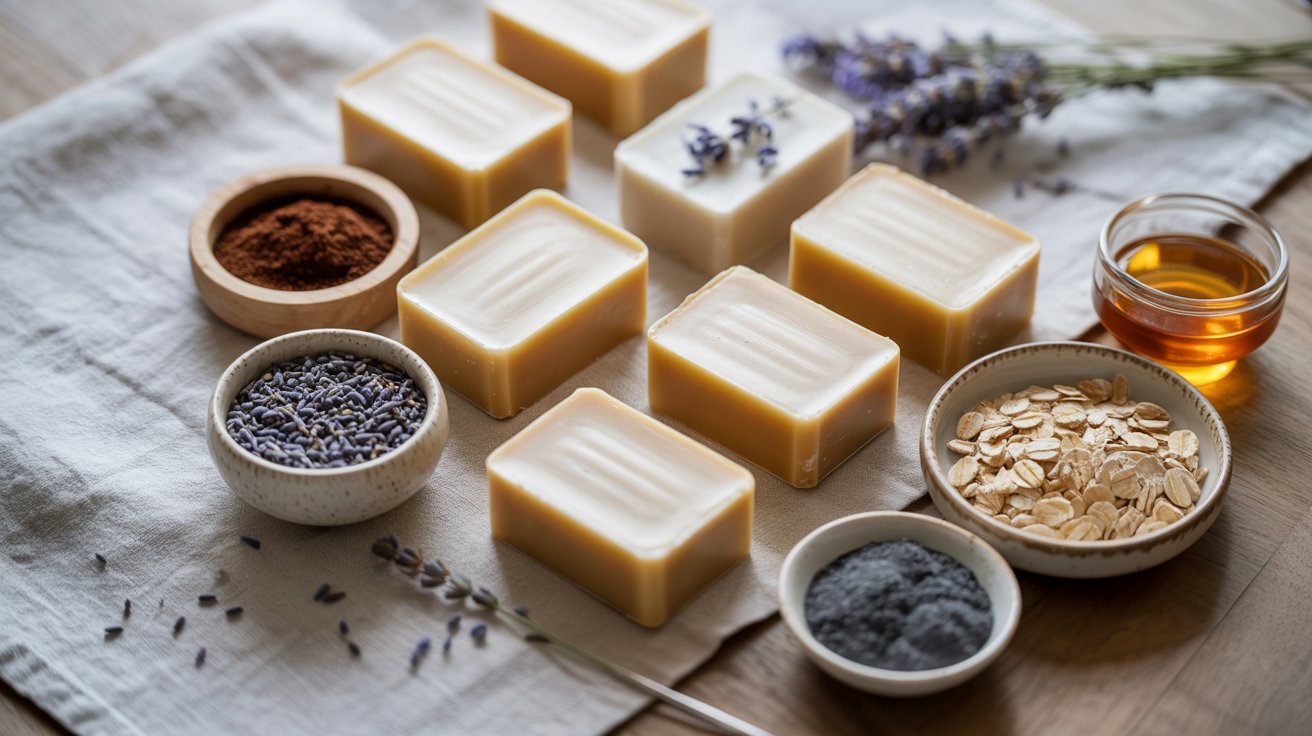
Handmade soap doesn’t need to be complicated to feel beautiful or intentional. In fact, the most loved bars are often the simplest ones — made with a clear base, one or two thoughtful add-ins, and a focus on how the soap looks, feels, and gets used in real life.
All of the ideas below are designed for melt-and-pour soap making. You’ll start with a premade soap base, melt it gently, stir in your chosen add-in, then pour and let it set. Once you understand the basic process, these variations let you customize soap without starting from scratch each time.
The Simple Soap Base These Add-Ins Work With
Each of these ideas begin with the same beginner-friendly melt-and-pour method. You melt a soap base using low heat, stir gently, pour into molds, and allow the soap to harden completely before unmolding.
However, if you’re completely new to melt-and-pour, it helps to start with the basics. You can learn the full step-by-step process in this Beginner’s Guide to Soap-Making before diving into these add-in ideas.

Coffee Grounds in Handmade Soap
Coffee grounds add weight, texture, and visual interest to soap. Even a plain rectangular bar feels intentional when fine grounds are suspended throughout the base. This style works especially well for kitchen or utility soaps where a slightly rustic look makes sense.
Gather used coffee grounds that have been fully dried. Fine grounds are best — they blend evenly and feel gentler on skin than coarse grounds.
Pro Tip: Use coffee grounds sparingly. Too much can make soap abrasive and interfere with how well it lathers.

Lavender in Soap (Dried Buds and Essential Oil)
Lavender is a classic add-in that feels both practical and decorative. Dried lavender buds create a soft botanical look, while lavender essential oil adds a familiar, calming scent.
Lightly crush the buds before adding them to the melted soap so they don’t feel sharp. Lavender looks especially beautiful in clear or pale soap bases where the buds remain visible after setting.

Activated Charcoal Soap Add-Ins
Activated charcoal creates bold contrast and a modern, minimal aesthetic. Even a small amount turns soap a deep gray or black, making simple molds look striking and intentional.
Charcoal pairs best with clean lines and uncluttered shapes. Let the color do the work rather than adding multiple textures.
Pro Tip: Mix charcoal with a small amount of melted soap first, then stir that mixture into the full batch to prevent speckling.

Oatmeal Soap Add-Ins
Oatmeal brings warmth and softness to handmade soap. Finely ground oats blend seamlessly into the base for a smooth look, while whole oats create a more rustic, farmhouse-style bar.
This add-in works well with honey, milk-based soap, or neutral essential oils. It’s forgiving, easy to work with, and ideal for beginners.

Honey in Melt-and-Pour Soap
Honey adds a subtle golden tone and a sense of richness that makes soap feel cozy and handmade. It works best in small amounts and blends beautifully with oatmeal or lavender.
Because honey is heavy and sticky, stir slowly and evenly to keep bubbles from forming and to help the soap set smoothly.
Choosing Soap Add-Ins With Intention
The most beautiful handmade soaps don’t rely on many add-ins — they rely on thoughtful ones. Choose one or two elements that complement each other visually and functionally.
Simple combinations feel better in use and are more likely to become part of daily routines rather than decorative extras. When in doubt, keep it minimal and let the materials speak for themselves.
And remember, if you are brand-new to soap-making, you can learn the full step-by-step process in this Beginner’s Guide to Soap-Making before moving on.