
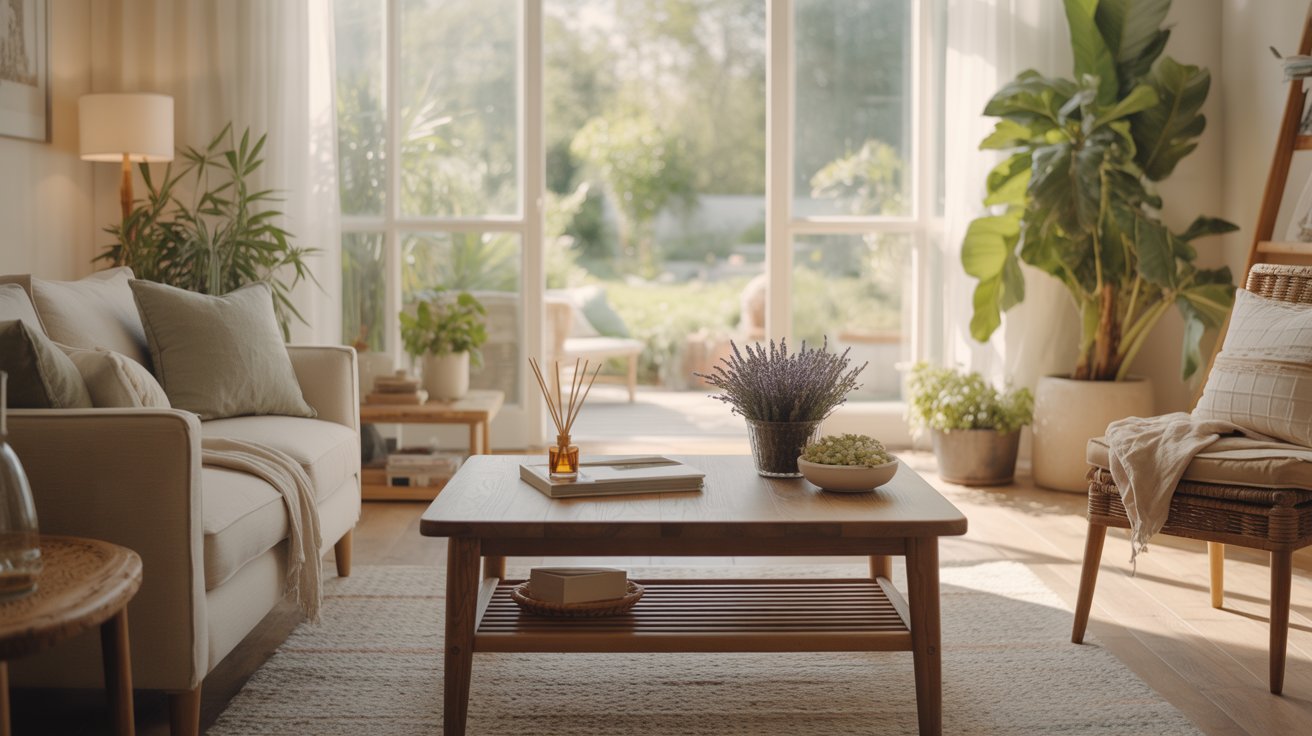
A calm, clean-smelling home sets the tone the moment someone walks through the door. The right scents make a space feel welcoming, soothing, and effortlessly lived-in.
This guide focuses on creating a subtle, inviting aroma using natural fragrance, simple habits, and intentional layering. No overpowering sprays. No constant candles. Just a home that smells fresh, calm, and inviting every day.

Start With a Truly Clean Base
Before adding any fragrance, the space itself needs to smell neutral. Scent should enhance a home, not mask it.
Open windows when possible, even for a few minutes. Fresh air clears lingering odors and resets the space. Pay extra attention to areas that hold smell, such as soft furnishings, carpets, and entryways.
Regularly washing throws, pillow covers, curtains, and lightly treating carpets helps eliminate trapped odors. Keeping these fabrics clean does more to freshen a home than any candle or room spray. And remember, this approach refreshes odors but won’t replace deep cleaning for stains, mold, or heavy, persistent smells. Want to take your home’s freshness even further? Check out our guide on tips and tricks for a truly fresh-smelling home.
Pro Tip:
Sprinkle baking soda on carpets, let it sit for 15–30 minutes, then vacuum thoroughly. For a subtle boost, mix in a few drops of lavender or cedarwood essential oil. This naturally refreshes fibers without harsh chemicals.
Use Natural Scents That Feel Soft, Not Strong
Once the home smells neutral, add gentle, natural fragrance. Essential oils are ideal because they smell clean and dissipate naturally.
Popular calming scents include:
- Lavender
- Eucalyptus
- Lemon
- Bergamot
- Cedarwood
A simmer pot is one of the easiest ways to gently improve how a room smells. Add citrus peels, fresh or dried herbs, or mild spices to a small pot of water and let it warm slowly on the stove. The aroma naturally diffuses through the air while creating a cozy, mood-boosting atmosphere.
Pro Tip:
Rotate simmer pot ingredients seasonally: try lemon + rosemary in summer and orange + cinnamon in winter.

Diffusing Essential Oils in Other Ways
Besides simmer pots, there are proven ways to bring essential oils into the air:
- Ultrasonic or Electric Diffusers
These devices disperse oils as a fine mist using water and vibrations, keeping fragrance gentle and long-lasting. Run them in living areas for 1–3 hours at a time. - Spray or Linen Mist
Mix distilled water with a few drops of essential oil in a small spray bottle. Lightly mist curtains, bedding, or pillows for an immediate, refreshing scent. Always let fabrics dry fully. - Reed Diffusers
Essential oils mixed with a carrier liquid in a small container release scent through reeds. Flip the reeds weekly to refresh the aroma. This method delivers a continuous, subtle scent without heat or electricity. - Air-Purifying Plants
Houseplants are a beautiful way to make your home feel fresher and more inviting. While they aren’t a substitute for good ventilation or an air purifier, some varieties—including spider plants, pothos, and peace lilies—have been shown to remove certain airborne compounds under controlled conditions. Place them near windows, in living areas, or on shelves where they’ll thrive, adding natural beauty and a calming presence to your home.
Layer Scent Room by Room
A welcoming home scent is built gradually. Instead of relying on one source, layer in small, intentional ways:
- Diffuser in main living spaces for steady aroma
- Lightly scented linens in bedrooms and entryways
- Small botanical touches like dried lavender or cedar sachets in drawers or closets
This layering strategy creates a cohesive, subtle scent that feels natural and calm.
Keep Fabrics Lightly Scented
Textiles play a major role in how a home smells. Lightly scented fabrics create a clean, cozy impression:
- Linen sprays made with distilled water and a few drops of essential oil can be used on curtains, throw pillows, and bedding.
- Drawer sachets with dried herbs, flowers, or citrus peels release gentle fragrance over time.
Pro Tip:
Mix dried botanicals with a pinch of rice or oat flakes in sachets to help scents last longer. Allow sprays to dry fully before use to prevent damp spots.
Let Everyday Habits Do the Work
Small routines make the biggest difference over time.
- Empty trash and recycling regularly
- Wipe kitchen sinks at the end of the day
- Let fresh air circulate whenever possible
Simmer pots, baking soda treatments, diffusers, and sachets work best when paired with consistent habits. This combination is what creates a truly inviting home.

Seasonal Scent Adjustments
Seasonal scent swaps keep your home feeling fresh and current:
- Lighter citrus and herbal notes for warmer months
- Soft woods, subtle spices, or calming herbs for cooler months
One seasonally inspired scent at a time ensures a natural, effortless aroma without overwhelming the space.
Keep It Simple and Sustainable
A calm-smelling home is less about adding more fragrance and more about balance. Clean surfaces, gentle scent, layered aroma, and small habits create a home that feels welcoming and sophisticated every day.
A Fresh-Smelling Home Starts With Simple Habits
Creating a home that smells inviting isn’t about flooding the air with scents. Focus on a few intentional, practical habits:
- Keep fabrics and carpets fresh with regular cleaning and natural odor absorbers
- Add subtle aroma through simmer pots, diffusers, reed diffusers, and sachets
- Layer scents gently across living areas, linens, and closets
- Maintain small daily routines that prevent odors from building
Even implementing just a couple of these steps will transform the way a home feels the moment someone walks in. Small, consistent actions lead to a space that’s calming, welcoming, and effortlessly fragrant.