
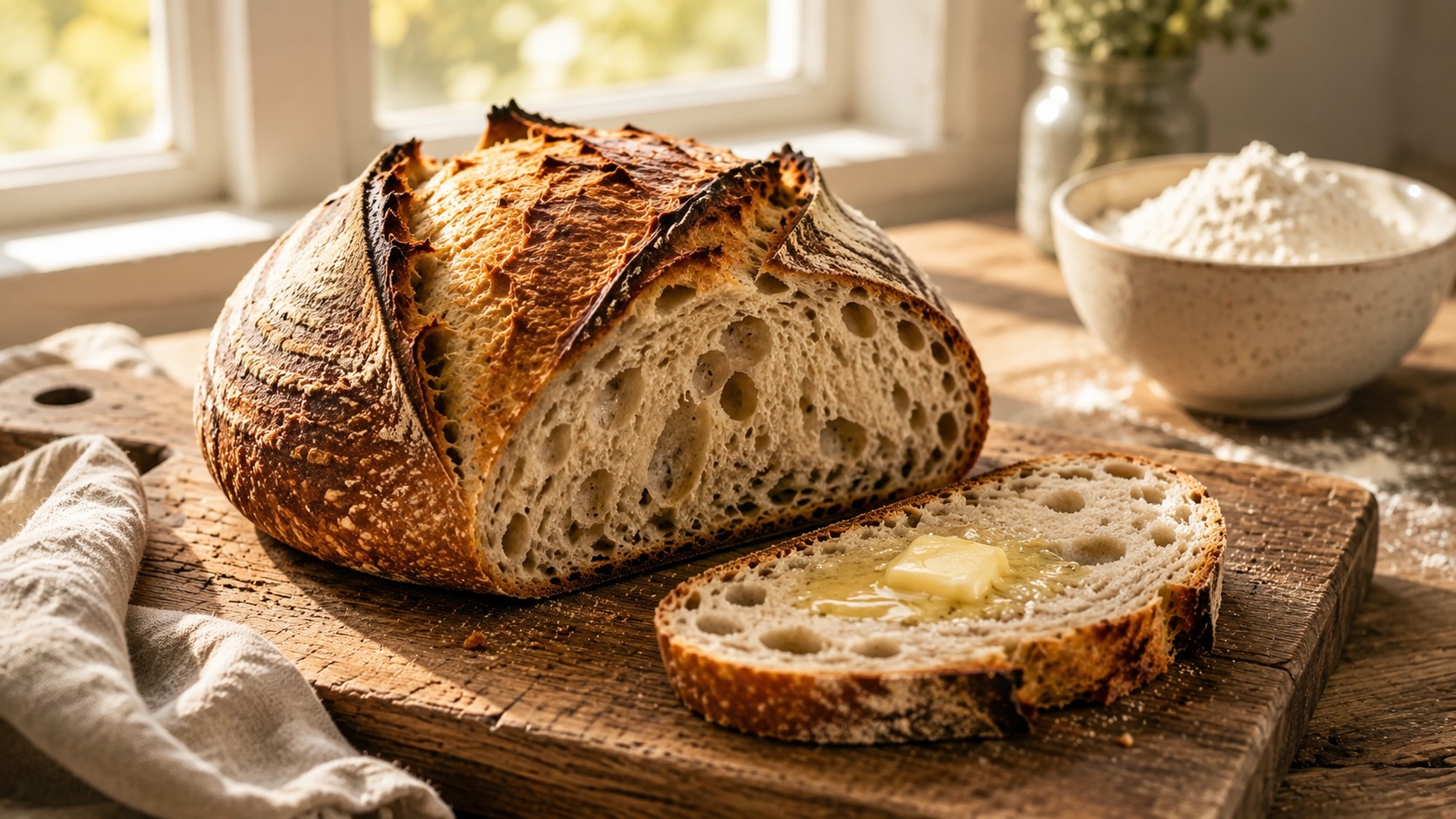
Few things are as comforting as the smell of fresh bread baking in the oven. Add a crisp, crackly crust and a warm, chewy slice slathered with butter, and it’s easy to understand why sourdough has captured so much attention in recent years.
Once found mostly in artisan bakeries, sourdough has become a staple everywhere from neighborhood grocery stores to home kitchens. It’s piled high with avocado at breakfast, served alongside hearty soups, transformed into crispy grilled cheese sandwiches, and even featured on holiday tables.
But what makes sourdough so different from the loaf sitting next to it on the grocery store shelf?
Is it really healthier than traditional white bread? Why does it taste so distinctive? And why are so many nutritionists and home bakers enthusiastic about it?
The answer starts with one simple thing: how it’s made.
Unlike most commercial breads that rely on packaged yeast and rise in just a few hours, authentic sourdough is made through a slow, natural fermentation process. That extra time doesn’t just create its signature tangy flavor. It also influences the bread’s texture, aroma, and even some of its nutritional qualities.
In this guide, we’ll explore what makes sourdough unique, what the science says about its potential health benefits, and why this centuries-old bread continues to win over so many people.
What Is Sourdough Bread?
Sourdough is bread made with a starter, a simple mixture of flour and water that’s allowed to ferment naturally.
Over time, wild yeast and beneficial bacteria found in the flour and the surrounding environment begin to grow. As the starter is regularly “fed” with more flour and water, it becomes an active culture capable of making bread rise without depending primarily on commercial yeast.
During fermentation, two important things happen:
- Wild yeast creates tiny bubbles of carbon dioxide that help the dough rise.
- Beneficial bacteria produce gentle organic acids that give sourdough its signature tang while contributing to its texture and aroma.
The result is a loaf that’s crisp on the outside, chewy on the inside, and full of rich, complex flavor.
Did You Know?
Sourdough isn’t a modern food trend. It’s one of the oldest forms of leavened bread in the world, with evidence of naturally fermented bread dating back thousands of years. Long before packets of yeast lined grocery store shelves, bakers relied on natural fermentation to make bread rise.
What Makes Sourdough Different from Regular Bread?
At first glance, sourdough and white sandwich bread don’t look all that different. Both start with simple ingredients like flour, water, and salt.
The biggest difference isn’t the ingredient list—it’s the process.
Most commercial bread is made with baker’s yeast, which allows dough to rise quickly. In many cases, a loaf can be mixed, baked, sliced, and packaged within hours.
Authentic sourdough takes its time.
Instead of rushing the process, the dough ferments slowly—often for 12 to 48 hours. During that time, the wild yeast and beneficial bacteria gradually develop the bread’s flavor, strengthen the dough, and create the chewy texture that sourdough is known for.
Sourdough vs. White Bread at a Glance
| Sourdough Bread | Traditional White Bread |
| Natural sourdough starter | Commercial baker’s yeast |
| Slow fermentation | Fast rise |
| Crisp, hearty crust | Soft crust |
| Chewy interior | Soft, fluffy texture |
| Mild tangy flavor | Mild, neutral flavor |
| Often made with a short ingredient list | May include preservatives, dough conditioners, or added sugar, depending on the brand |
Quick Tip
If you’re shopping for authentic sourdough, take a quick look at the ingredient label. Traditional sourdough is often made with just flour, water, salt, and a sourdough culture. Some grocery store loaves are flavored to taste like sourdough but don’t undergo the same long fermentation process.
Now that you know what makes sourdough unique, let’s look at the question most people are really asking: Is sourdough actually better for you than regular bread?
Is Sourdough Actually Better for You?
It’s one of the most common questions people ask about sourdough, and the answer isn’t as simple as “yes” or “no.”
Sourdough isn’t a superfood, and it’s not a substitute for eating a balanced diet. But because of the way it’s made, authentic sourdough does have a few characteristics that set it apart from many commercially produced white breads.
The Science Behind It
The biggest difference is the slow fermentation process.
As sourdough dough ferments, the wild yeast and beneficial bacteria begin breaking down some of the starches and proteins in the flour while producing the compounds that give sourdough its distinctive flavor and texture.
Researchers continue to study how fermentation affects digestion and nutrition, but several potential benefits have consistently emerged.
It May Be Easier to Digest
Many people say they feel more comfortable after eating sourdough than they do after eating regular white bread.
One reason may be that fermentation begins breaking down some of the carbohydrates and proteins before you eat them. Your digestive system still has work to do, but some people find authentic sourdough feels gentler on their stomach.
It’s important to remember, though, that everyone’s digestive system is different. What works well for one person may not be the same for another.
It May Have a Smaller Effect on Blood Sugar
Another area researchers have studied is how sourdough affects blood sugar.
Some studies suggest that authentic sourdough may produce a lower glycemic response than certain refined white breads. In other words, blood sugar may rise more gradually after eating it.
That doesn’t mean all sourdough has a low glycemic index. The type of flour, the length of fermentation, and even the recipe itself all play a role.
Fermentation Can Improve Mineral Availability
Grains naturally contain a substance called phytic acid, sometimes referred to as an “anti-nutrient” because it can reduce the body’s ability to absorb certain minerals.
During sourdough fermentation, some of that phytic acid is broken down.
As a result, minerals such as iron, magnesium, and zinc may become easier for the body to absorb than they are in some other breads.
Did You Know?
The tangy flavor in sourdough doesn’t come from added ingredients. It develops naturally during fermentation as beneficial bacteria produce organic acids. The longer the dough ferments, the more complex the flavor can become.
Does Sourdough Contain Gluten?
This is one of the biggest misconceptions about sourdough.
Although fermentation changes some of the proteins found in wheat flour, traditional sourdough is not gluten-free.
People with celiac disease should avoid regular sourdough unless it’s specifically made with certified gluten-free ingredients in a safe production environment.
Some people with mild gluten sensitivity—not celiac disease—say they tolerate authentic sourdough better than conventional bread. Scientists believe fermentation may play a role, but more research is still needed.
If you have celiac disease or have been advised by your healthcare provider to avoid gluten, regular sourdough isn’t considered a safe alternative.
Quick Tip
If you’re looking for the greatest nutritional benefit, choose a loaf that’s been naturally fermented for an extended period. Many artisan bakeries are happy to tell customers how their bread is made, and some even list fermentation times on their websites or in-store displays.
Homemade vs. Store-Bought Sourdough
If you’ve fallen in love with sourdough, you might be wondering whether it’s worth baking your own or if buying a loaf from the bakery is just as good.
The truth is, both have their place.
Homemade sourdough gives you complete control over the ingredients, the fermentation time, and the flavor. Every loaf is a little different, and many home bakers enjoy the process just as much as the finished bread. Caring for a starter can become part of a weekly routine, and there’s something deeply satisfying about pulling a golden loaf from the oven after patiently waiting for it to rise.
Store-bought sourdough, on the other hand, offers convenience—and there are some excellent options available.
The key is knowing what you’re buying.
Some grocery store loaves labeled “sourdough” are made primarily with commercial yeast and include added flavors to mimic the tang of traditional sourdough. Others are naturally fermented using a genuine starter and follow a much slower baking process.
Quick Tip
When shopping for sourdough, read the ingredient list. Traditional loaves are often made with just flour, water, salt, and a sourdough starter. If the label includes commercial yeast as one of the first ingredients, the bread may not have gone through the same long fermentation that gives authentic sourdough its unique qualities.
Delicious Ways to Enjoy Sourdough
One of the best things about sourdough is its versatility. While it’s wonderful for sandwiches, that’s really just the beginning.
Its sturdy texture and rich flavor make it a natural companion to both everyday meals and special occasions.
Try serving sourdough:
- Toasted with butter, jam, or avocado for breakfast
- Alongside soups, stews, and chili
- As the foundation for a crispy grilled cheese sandwich
- Cut into cubes for homemade croutons
- Topped with tomatoes and basil for bruschetta
- As French toast with fresh fruit and maple syrup
- Torn into pieces for dipping in olive oil and herbs
- As part of a charcuterie board with cheeses, fruit, and cured meats
- In homemade stuffing for Thanksgiving or holiday dinners
- Toasted and spread with whipped ricotta, honey, or seasonal fruit for an easy appetizer
Did You Know?
Day-old sourdough is often better for recipes like French toast, stuffing, and croutons because its firm texture absorbs flavor without becoming overly soft.
Whether you’re picking up a loaf from your favorite bakery or trying your hand at baking one yourself, sourdough offers something that’s increasingly rare in today’s fast-paced world: food that’s made with patience.
Its slow fermentation, simple ingredients, and timeless appeal remind us that sometimes the best things really do take a little longer. And whether it’s served beside a bowl of soup on a chilly evening or at the center of a holiday table surrounded by family and friends, sourdough has a way of turning an ordinary meal into something that feels just a bit more special.
Ready to take your baking further? Browse our curated guide to practical sourdough gifts and tool upgrades for ideas on baking scales, bannetons, and Dutch ovens.