
This post may contain affiliate links. As an Amazon Associate, the site earns from qualifying purchases at no extra cost to you.
Smart, space-saving furniture ideas that help small rooms feel open, calm, and beautifully designed start with one simple principle: scale changes everything.
Small rooms can feel tight quickly—especially when furniture is too large, too tall, or visually heavy. Even well-designed pieces can overwhelm a space when they don’t allow the eye (and the light) to move freely through the room.
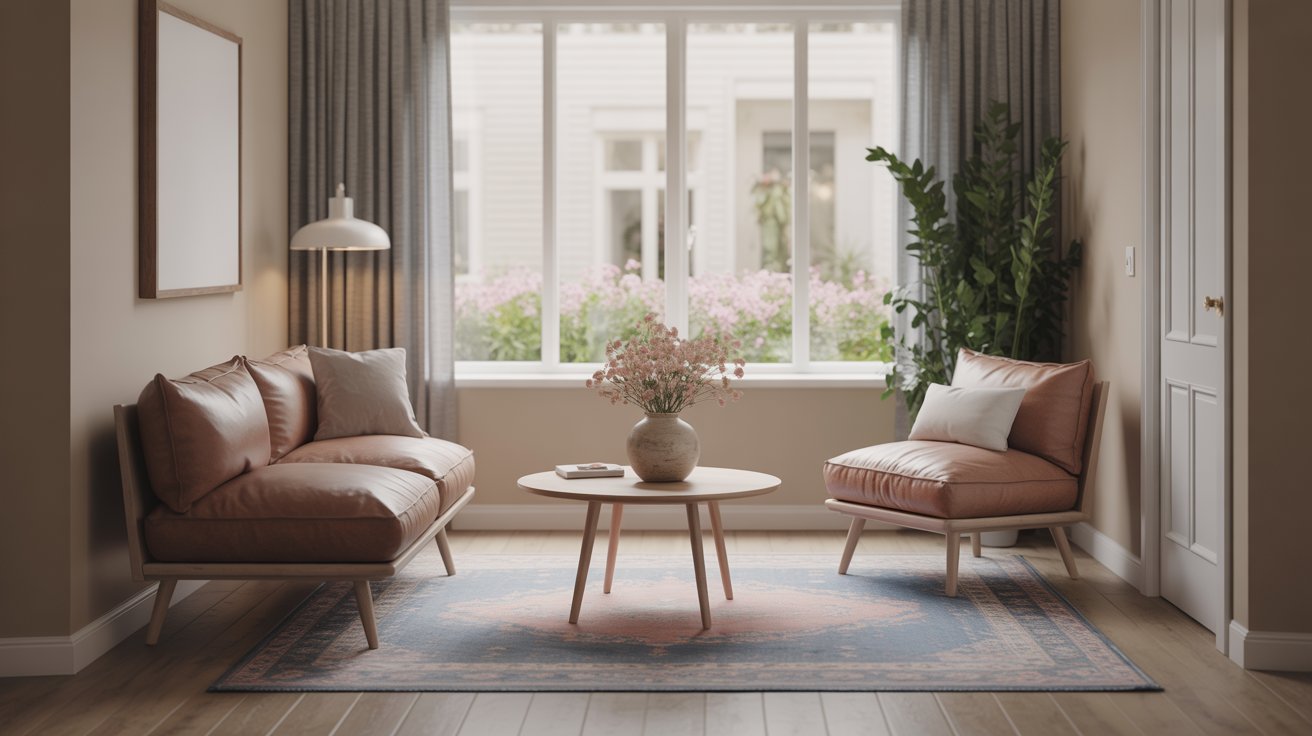
One of the most effective interior design strategies for opening up a compact space is using low-profile furniture. These pieces sit lower to the ground, have slimmer silhouettes, and reveal more visible floor area—instantly making a room feel lighter, more open, and more intentional.
Below are carefully selected low-profile furniture ideas and design approaches that designers rely on to make small spaces feel airy, balanced, and beautifully composed. And for more ideas to make a small space feel bigger, check out 5 Room Decor Ideas to Make Your Home Look Bigger!

1. Low-Profile Sofas That Visually Expand the Room
In small living rooms, the sofa defines everything. If it’s bulky or tall-backed, it creates a visual barrier that shrinks the room instantly.
Low-profile sofas solve this by lowering visual height and keeping sightlines open across the space.
Look for:
- Low back height
- Slim arms
- Exposed legs
- Apartment-scale width
✔ Best Overall (balanced + designer-friendly)
A clean, neutral sofa with tapered legs that works in almost any small space.
→ Mid-century modern low-profile sofa with tapered legs
✔ Best for Tight Apartments (space-efficient)
Compact design with reduced depth and narrow arms.
→ Apartment-size sofa under 80 inches

2. Round Coffee Tables That Improve Flow Instantly
Coffee tables often create more visual weight than expected. Sharp corners and heavy bases can break up movement and make a small room feel tighter.
Round, low-profile tables remove those visual stops and create better flow.
Look for:
- Round or oval shape
- Light or open base
- Lower height
- Proportion smaller than sofa
✔ Best Overall
Balanced wood table that fits most small spaces.
Round wood coffee table with slim legs.
✔ Best for Ultra-Small Spaces
Glass or airy base that visually disappears.
→ Glass coffee table with metal frame base
✔ Best Designer Accent
Sculptural oval shape for a styled look.

3. Slim Accent Chairs That Don’t Overcrowd the Room
Accent chairs add seating, but in small rooms they can easily overwhelm the layout if too wide or bulky.
Slim chairs keep function without visual heaviness.
Look for:
- Narrow arms or armless
- Exposed legs
- Compact seat depth
✔ Best Overall
Mid-century inspired chair that fits most layouts.
→ Mid-century accent chair with wood legs
✔ Best Small-Space Option
Compact upholstered chair with minimal footprint.
→ Compact neutral accent chair
✔ Best Flexible Option
Swivel design for multi-direction seating.
→ Small swivel accent chair for apartments

4. Platform Beds That Make Bedrooms Feel Larger
Low platform beds reduce visual height, which makes ceilings feel taller and bedrooms feel calmer.
Look for:
- Low base
- Minimal headboard
- Clean lines
✔ Best Overall
Simple upholstered platform bed.
→ Low upholstered platform bed frame
✔ Best Minimal Look
Clean wood frame with no visual bulk.
✔ Best Modern Option
Low-profile bed designed for tight bedrooms.
→ Modern low-profile bed frame

5. Narrow Console Tables That Add Storage Without Bulk
Console tables are ideal for small spaces because they provide function without depth.
Look for:
- Under 14” depth
- Slim frame
- Open base
✔ Best Overall
Minimal console for entryways or behind sofas.
✔ Best for Behind Sofa
Long narrow design for living rooms.
→ Narrow wood console table for behind sofa
✔ Best Minimal Look
Light metal frame design.
→ Minimal metal/glass console table

6. Furniture With Exposed Legs That Visually Lighten the Room
Furniture that lifts off the floor creates instant visual space underneath.
Look for:
- Tapered wood legs
- Metal frames
- Raised bases
✔ Best Overall Sofa
Clean-lined sofa with visible legs.
✔ Best Accent Chair
Open frame chair for visual lightness.
✔ Best Coffee Table
Minimal raised design.
→ Raised minimalist coffee table

7. Storage Benches That Do Two Jobs in One
Storage benches combine seating + hidden storage, which is perfect for small rooms.
Look for:
- Lift-top storage
- Compact rectangular shape
- Upholstered or wood finish
✔ Best Bedroom Option
Soft upholstered bench with storage.
✔ Best Entryway Option
Wood bench with hidden storage.
→ Wooden entryway storage bench
✔ Best Minimal Style
Clean modern bench.
→ Storage Coffee Table with Slim Legs

8. Low-Profile Shelving That Keeps Walls Open
Shorter or floating shelving avoids visual clutter on walls.
Look for:
- Horizontal orientation
- Open shelving
- Minimal structure
✔ Best Overall
Low open bookcase.
✔ Best Wall Storage
Floating shelves.
✔ Best Minimal Console Shelf
Slim horizontal unit.
→ Floating Horizontal console shelf

9. Low-Profile Lighting That Softens the Room
Lighting changes how large or small a space feels.
Look for:
- Slim floor lamps
- Small table lamps
- Soft shades
✔ Best Floor Lamp
Minimal arc design.
✔ Best Table Lamp
Simple ceramic base.
✔ Best Ambient Light
Soft globe lamp.

10. Negative Space That Lets Small Rooms Breathe
The most overlooked part of low-profile design isn’t the furniture, it’s the space between things. Negative space is what allows small rooms to feel open, intentional, and calm instead of crowded.
Even the best low-profile furniture won’t feel airy if every surface, wall, and corner is filled. Leaving visual breathing room is what creates that “designed but not overdone” feeling.
Look for:
- Visible floor space between furniture pieces
- Open wall areas (not over-decorated)
- Clear sightlines across the room
✔ Best Approach: Leave Space Around Furniture
Allow sofas, chairs, and tables to “float” instead of pushing everything tightly against walls.
✔ Best Approach: Edit Accessories Ruthlessly
Use fewer, larger, more intentional decor pieces instead of many small items.
✔ Best Approach: Prioritize Sightlines
Make sure you can visually move through the room without interruption from bulky objects or clutter.
Pro Tips:
- Use light rugs to expand visual space
- Mix low furniture with one taller element (lamp or plant)
- Stick to 2–3 materials per room
- Avoid overcrowding surfaces
- Layer soft textures for warmth
Small rooms don’t need to feel limiting. With the right furniture scale, even compact spaces can feel open, calm, and intentionally designed.
Low-profile sofas, slim tables, and streamlined furniture all work together to improve flow and reduce visual weight — creating a home that feels larger without changing its footprint.
The key is simple: choose pieces that let the room breathe.