
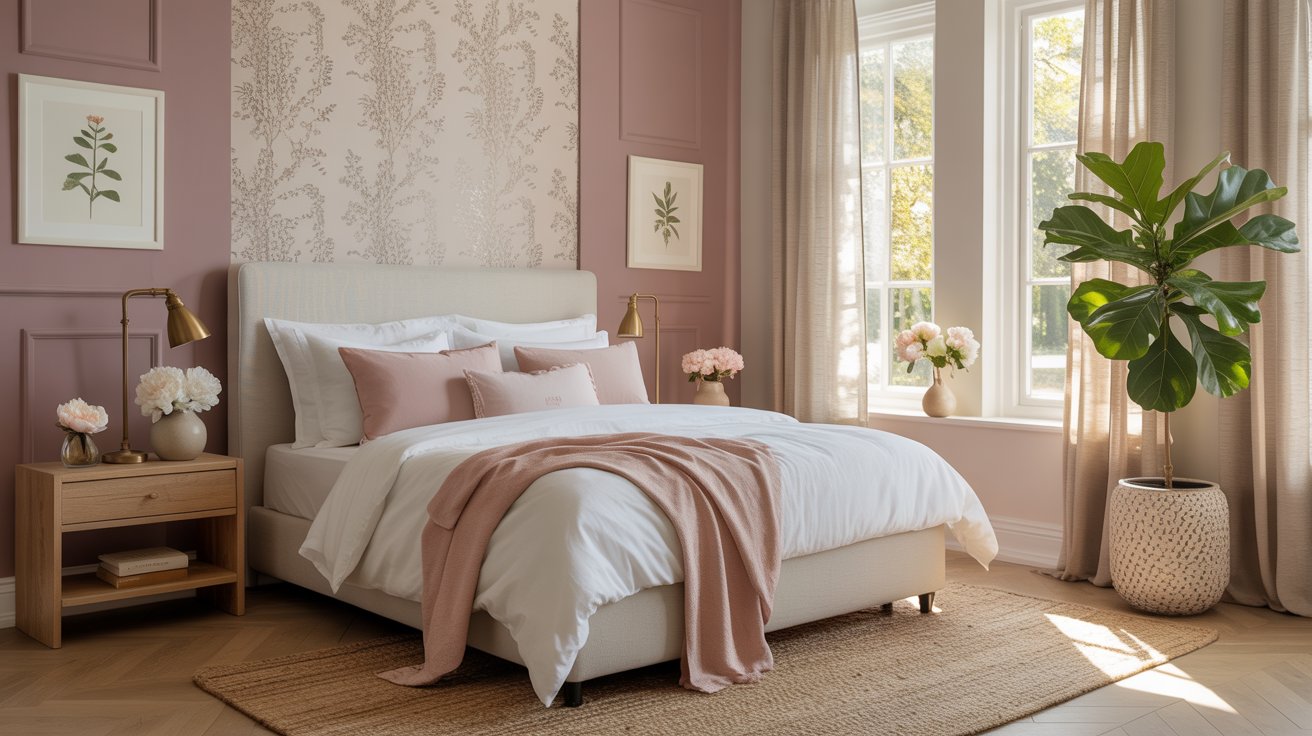
Pink wallpaper works quietly yet powerfully. It lifts walls, softens edges, and gives rooms a subtle warmth that feels alive without overwhelming. Whether soft and airy or deeper and layered, pink can adjust the tone of a space, creating an atmosphere that feels thoughtful, bright, and approachable.
Used thoughtfully, pink acts less like decoration and more like light itself, reflecting, softening, and shaping a room. Paired with simple materials—pale wood, white trim, linen textiles—it feels architectural and curated, even in small doses. Below are ten distinct ways to use pink wallpaper, each offering a different mood, scale, and design opportunity.

1. Soft Blush Pink Wallpaper
Soft blush lifts a room gently. It brightens walls, softens edges, and gives a quiet sense of calm.
Atmosphere: light-reflective, gentle, clarifying
Soft blush pink acts almost like a warm neutral. Its subtle warmth softens edges and reflects light, creating openness without dominating the room.
Best for: bedrooms, small rooms, or areas that benefit from understated warmth
How to style: Pair with white or cream trim, pale wood furnishings, and linen textiles. Keep patterns minimal to let the color breathe.
Design note: A warm undertone keeps the light soft and inviting.

2. Dusty Rose or Muted Mauve
Dusty rose adds depth without heaviness. It feels composed, calm, and quietly grown-up.
Atmosphere: grounded, composed, calm
Deeper pinks create a sense of enclosure without feeling dark. They bring a layered, intentional presence to a room.
Best for: studies, reading nooks, or secondary bedrooms
How to style: Pair with warm woods, brass accents, and neutral fabrics. An accent wall works if a full wrap feels too intense.
Design note: Dusty tones hold depth in moderate or low light without darkening the space.

3. Peach-Leaning Pink Wallpaper
Peachy pink brings warmth and a soft glow. It catches the light and makes a space feel inviting.
Atmosphere: warm, open, sunlit
Peach-infused pinks enhance natural light and lend warmth. They make rooms feel breathable and welcoming.
Best for: kitchens, breakfast corners, east-facing rooms
How to style: Pair with white cabinetry, pale woods, and natural textures like cane or linen.
Design note: Avoid cool gray pairings that flatten the warmth.

4. Floral Pink Wallpaper
Floral patterns add rhythm and movement. They give walls personality without cluttering the space.
Atmosphere: layered, welcoming, structured
Smaller-scale florals read as subtle layering, creating texture without overwhelming. Large-scale patterns are best reserved for feature walls.
Best for: bedrooms, powder rooms, transitional spaces
How to style: Combine with white trim, simple furniture, and restrained artwork.
Design note: Keep the scale appropriate to the room’s size for a calm, balanced look.

5. Botanical Pink Wallpaper
Botanical pink connects a room to nature. Soft pink meets organic shapes for a grounded, serene feel.
Atmosphere: fresh, balanced, nature-connected
Botanical motifs introduce rhythm and life while staying subtle. They create a serene, visually engaging backdrop.
Best for: bathrooms, sunrooms, entryways
How to style: Add live plants, pale woods, or ceramic accents to echo the natural theme.
Design note: Keep surrounding finishes simple so the pattern feels intentional, not busy.

6. Striped or Ticking-Stripe Pink Wallpaper
Stripes bring structure and rhythm. They guide the eye and make a room feel intentional.
Atmosphere: structured, linear, composed
Vertical or horizontal stripes create visual order and reinforce proportions without overwhelming.
Best for: hallways, children’s rooms, home offices
How to style: Pair with simple furniture and quiet textiles. Vertical stripes can help a room feel taller.
Design note: Adjust stripe scale to the room size for balance—small stripes for cozy spaces, larger for taller walls.

7. Geometric or Modern Pink Wallpaper
Geometric patterns keep pink precise and architectural. They add energy without fuss.
Atmosphere: precise, contemporary, orderly
Shapes and repetition bring clarity and structure, ensuring the pink reads as intentional and design-forward.
Best for: offices, feature walls, creative spaces
How to style: Pair with neutral furnishings, black or brass accents, and restrained textiles.
Design note: Limit other patterns in the room so the wallpaper remains the focal system.

8. Textured Pink Wallpaper (Linen, Grasscloth, Plaster Effect)
Texture gives depth without pattern. Light dances across the surface for subtle interest.
Atmosphere: subtle, tactile, refined
Surface variation introduces dimension and tactility while keeping the overall effect understated.
Best for: living rooms, dining rooms, minimalist bedrooms
How to style: Layer neutrals, wood furniture, and soft lighting to enhance the texture.
Design note: Matte or low-sheen finishes prevent glare and preserve a natural feel.

9. Scenic or Vintage-Inspired Pink Wallpaper
Scenic pinks tell a story. The motifs feel considered, and pink softens them for balance.
Atmosphere: narrative, composed, expressive
Scenic and toile designs create visual rhythm and narrative without becoming decorative clutter.
Best for: dining rooms, stairwells, statement bedrooms
How to style: Keep furnishings and colors muted so the wall functions as an anchor.
Design note: One wall is usually enough for impact; avoid wrapping the room unless it’s very large.

10. Pink Wallpaper as an Accent Wall
An accent wall lets pink shine. It defines a space without overwhelming the room.
Atmosphere: focused, intentional, balanced
Used selectively, pink draws attention while keeping the rest of the room neutral and flexible.
Best for: behind beds, in alcoves, small or multi-use rooms
How to style: Pair with solid textiles, quiet adjacent walls, and subtle decorative accents.
Design note: Echo the pink elsewhere in the room in small doses to unify the space.
Pink wallpaper is more than a color choice—it’s a way to adjust the mood, reflect light, and subtly shape the feeling of a room. From soft blush to peachy warmth, floral patterns to structured stripes, each option offers a different rhythm and personality. With thoughtful pairing and placement, pink can transform a space quietly, creating a balance of calm, optimism, and considered design that lasts beyond trends.